Does Rain Clean Solar Panels? Truth Explained for Nepal Users
Solar energy is rapidly growing in Nepal, especially in cities like Kathmandu, Lalitpur, and Bhaktapur where rooftops are filled with solar panels for homes, offices, and industries. Many people assume that rain naturally cleans solar panels, so they don’t need maintenance. But is this really true?
The short answer is: Rain helps a little, but it does NOT fully clean solar panels. In fact, depending on location and pollution levels, rain may only remove loose dust while leaving behind stubborn dirt, stains, and grime.
In this blog, we will explain the real truth about rain and solar panel cleaning, especially for Nepal’s climate and environmental conditions. And you can make the decision about does rain clean solar panels or not.
Table of Contents
How Solar Panels Get Dirty in Nepal?
Before understanding rain’s effect, it’s important to know how solar panels become dirty in the first place.
In Nepal, especially in urban areas like Kathmandu Valley, solar panels are exposed to:
• Dust from construction and roads
• Vehicle pollution and smoke particles
• Bird droppings
• Tree sap and leaves
• Pollen and organic debris
• Industrial pollution in some areas
• Ash and fine particles from burning waste
Over time, these materials create a thin layer on the panel surface known as soiling. This layer blocks sunlight and reduces energy generation.
Even a small amount of dirt can reduce efficiency by 10% to 30%, and in heavily polluted areas, the loss can be even higher.
Does Rain Really Clean Solar Panels?
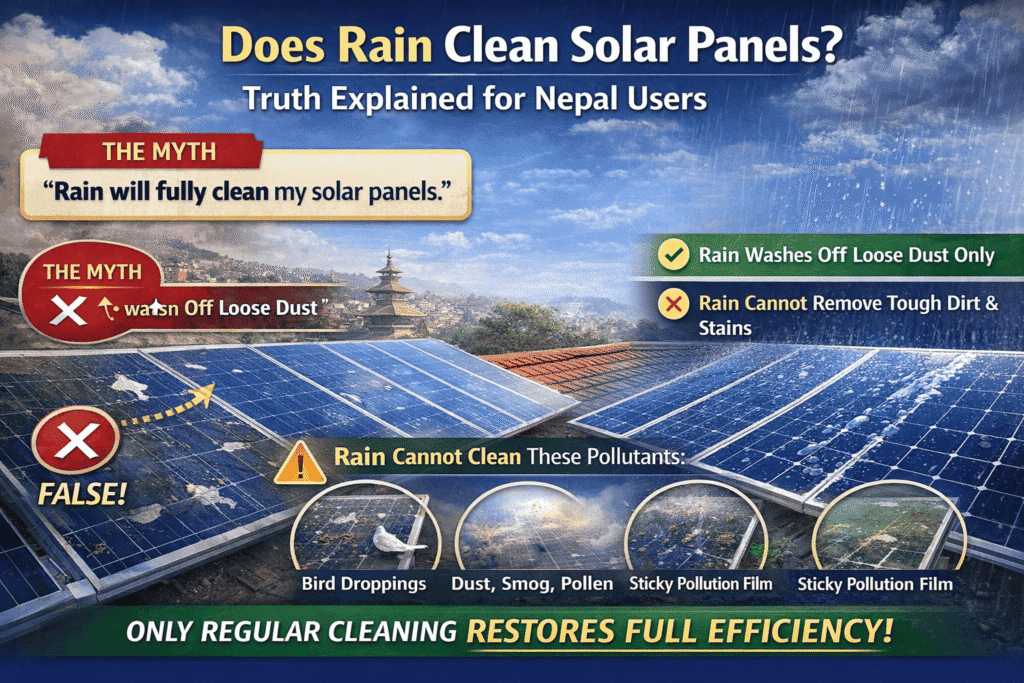
Rain does have some cleaning effect, but it is very limited.
What rain can do:
• Wash away loose dust particles
• Reduce surface dirt temporarily
• Improve panel appearance slightly
What rain cannot do:
• Remove sticky dirt or mud
• Clean bird droppings
• Remove grease or pollution film
• Clean corners and edges properly
• Restore full panel efficiency
So, while rain may make panels look cleaner, it does not restore their full performance.
Why Rain Alone is Not Enough in Kathmandu?
Kathmandu has a unique environmental situation that affects solar panel cleanliness:
1. High Dust Pollution
Road dust, construction activities, and dry soil particles settle on panels. When rain falls, it often mixes with dust and forms a muddy layer instead of cleaning properly.
2. Air Pollution
Vehicle emissions and industrial smoke create a sticky layer on solar panels. Rain cannot fully wash this oily residue.
3. Monsoon Conditions
During monsoon season, rain is frequent but often mixed with pollution particles in the air, which can leave marks instead of cleaning effectively.
4. Bird Droppings
This is one of the biggest problems. Rain does not remove hardened bird droppings, which strongly stick to the panel surface and block sunlight.
Myth: “Rain Means I Don’t Need Solar Panel Cleaning”
This is one of the most common myths among solar users.
Many homeowners believe:
“If it rains, my solar panels are automatically cleaned.”
But in reality, rain only provides a partial rinse, not a deep cleaning.
Without proper maintenance, solar panels gradually lose efficiency even during rainy seasons.
How Dirty Panels Affect Solar Performance?
Dirty solar panels can significantly reduce energy production.
Here’s what happens when panels are not cleaned:
• Reduced sunlight absorption
• Lower electricity generation
• Inconsistent system performance
• Higher dependency on grid electricity
• Long-term damage due to accumulated debris
In Nepal, where solar energy is an important backup due to load shedding in the past, reduced efficiency can directly affect energy savings.
How Often Should Solar Panels Be Cleaned in Nepal?
The cleaning frequency depends on location and environment:
• Urban areas (Kathmandu, Lalitpur, Bhaktapur): Every 2–3 months
• Rural areas: Every 4–6 months
• Near construction zones or roads: Monthly or bi-monthly
• Industrial areas: More frequent cleaning recommended
During monsoon, cleaning may still be required because rain does not remove all types of dirt.
Best Way to Clean Solar Panels
Professional cleaning is the safest and most effective method.
Why professional cleaning is better than rain or DIY cleaning:
• Uses purified water (prevents mineral stains)
• Removes tough stains and bird droppings
• Safe for panel surface and coating
• Improves energy efficiency immediately
• Reduces risk of panel damage or cracks
• Reaches hard-to-access rooftop systems safely
Professional cleaners use soft brushes, water-fed poles, and non-abrasive tools designed specifically for solar panels.
Benefits of Regular Solar Panel Cleaning
Keeping solar panels clean provides several benefits:
1. Higher Energy Output
Clean panels absorb more sunlight and generate more electricity.
2. Longer System Life
Dust and dirt can damage the surface over time. Cleaning prevents long-term degradation.
3. Better Return on Investment
Solar systems are expensive, and cleaning ensures maximum savings from electricity production.
4. Improved Efficiency During All Seasons
Even in monsoon or winter, clean panels perform better than dirty ones.
5. Early Damage Detection
Cleaning allows inspection of cracks, loose wiring, or physical damage.
When Rain Can Help a Little
Rain is not useless—it does provide some benefits:
• Light rainfall can reduce loose dust buildup
• After long dry seasons, rain can improve surface visibility
• It helps temporarily cool down panels, improving performance slightly
However, this effect is temporary and not sufficient for long-term maintenance.
Common Mistakes Solar Users Make
Many solar panel owners in Nepal make these mistakes:
• Relying only on rain for cleaning
• Ignoring bird droppings for long periods
• Using hard water for DIY cleaning
• Cleaning panels in harsh sunlight (causes streaks and damage)
• Not scheduling regular maintenance
These mistakes can reduce system efficiency and lifespan.
Final Verdict: Does Rain Clean Solar Panels?
Rain does help remove light dust, but it is NOT a complete cleaning solution.
In Nepal’s environment—especially in cities like Kathmandu—solar panels require regular professional cleaning to maintain efficiency and performance. Dust, pollution, and bird droppings cannot be removed effectively by rain alone.
If you want maximum electricity production and long-term savings from your solar system, regular cleaning is essential, not optional.
Conclusion
Solar panels are a smart investment for clean energy in Nepal, but their performance depends heavily on maintenance. While rain gives a natural rinse, it cannot replace proper cleaning.
To keep your solar system working at full capacity, schedule regular professional cleaning and avoid relying on weather alone.
A clean solar panel is a powerful solar panel.
FAQs – Does Rain Clean Solar Panels? Truth Explained for Nepal Users
- Does rain fully clean solar panels?
No, rain does not fully clean solar panels. It may wash away loose dust, but it cannot remove sticky dirt, bird droppings, pollution layers, or grime that reduce panel efficiency. - Can rain improve solar panel performance?
Rain can slightly improve performance by cooling panels and removing some surface dust, but the improvement is temporary and minimal compared to proper cleaning. - Why are solar panels still dirty after rain in Kathmandu?
In Kathmandu, rain mixes with dust, pollution, and industrial particles. Instead of cleaning completely, it often leaves behind streaks, mud spots, or residue on panels. - How often should solar panels be cleaned in Nepal?
In urban areas like Kathmandu, solar panels should be cleaned every 2–3 months. In highly polluted or dusty areas, more frequent cleaning may be needed. - What happens if solar panels are not cleaned regularly?
Dirty solar panels can lead to:
• Reduced electricity generation (10%–30% loss or more)
• Lower system efficiency
• Shortened panel lifespan
• Poor return on solar investment - Can bird droppings be removed by rain?
No, bird droppings are sticky and hard to remove. Rain cannot clean them effectively, and they must be removed manually during professional cleaning. - Is DIY cleaning better than rain?
DIY cleaning can be better than rain, but it must be done carefully. Using improper tools or hard water can damage panels. Professional cleaning is the safest and most effective option. - What is the best way to clean solar panels?
The best method is professional cleaning using soft brushes, purified water, and non-abrasive tools to safely remove dirt without damaging the panel surface. - Does monsoon rain clean solar panels in Nepal?
Monsoon rain provides some cleaning effect, but due to heavy pollution and dust in the air, it does not fully clean panels or restore maximum efficiency. - Can dirty solar panels increase electricity bills?
Yes, if solar panels produce less electricity due to dirt, you may rely more on grid electricity, which can indirectly increase your electricity costs. - Are clean solar panels more efficient?
Yes, clean solar panels absorb more sunlight and generate more power, improving overall system efficiency and energy savings. - How do I know if my solar panels need cleaning?
Signs include:
• Visible dust or stains
• Drop in electricity generation
• Bird droppings on panels
• Long time since last cleaning - Is professional cleaning necessary even if it rains regularly?
Yes, because rain cannot remove all types of dirt. Professional cleaning ensures deep cleaning and maximum performance. - Does cleaning damage solar panels?
No, when done professionally using proper tools and techniques, cleaning is completely safe and helps protect panel performance. - Can I rely only on rain for solar maintenance?
No, relying only on rain is not enough. Regular inspection and professional cleaning are necessary to maintain long-term solar efficiency in Nepal.