DIY vs Professional Solar Panel Cleaning – Which is Better?
Solar panels are becoming increasingly popular in Nepal, especially in Kathmandu, Lalitpur, Bhaktapur, and other urban areas where rooftop solar systems help reduce electricity costs and provide backup energy. However, one important factor that directly affects solar performance is cleaning and maintenance.
Many solar users often ask: “Should I clean solar panels myself (DIY) or hire professionals?”
The answer depends on safety, efficiency, and long-term performance. In this detailed guide, we will compare DIY vs Professional Solar Panel Cleaning and explain which option is truly better for Nepal’s environment.
Table of Contents
Why Solar Panel Cleaning is Important?
Before comparing DIY vs Professional Solar Panel Cleaning, it is important to understand why cleaning matters.
Solar panels lose efficiency when dust, pollution, and debris accumulate on the surface. In Nepal, common causes of dirt include:
• Road dust and construction particles
• Vehicle smoke and air pollution
• Bird droppings
• Pollen and leaves
• Industrial emissions
• Rainwater residue mixed with dust
Even a thin layer of dirt can reduce efficiency by 10% to 30%, and in extreme cases even more.
Dirty panels = lower electricity generation = reduced savings.
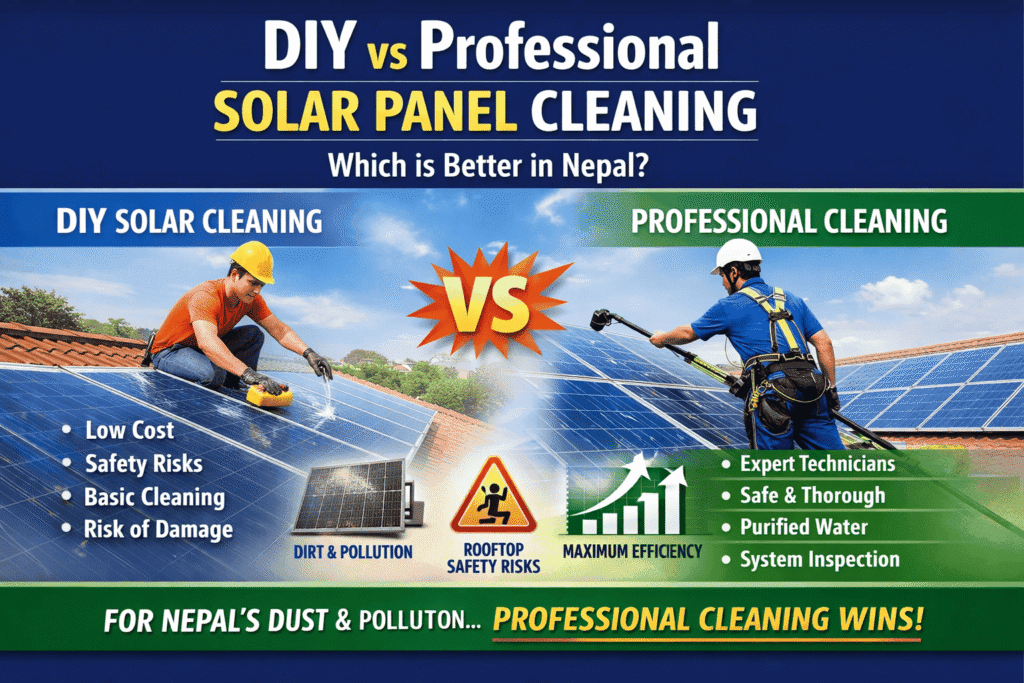
DIY Solar Panel Cleaning
DIY (Do-It-Yourself) cleaning means cleaning solar panels by yourself without professional help.
How people usually do DIY cleaning:
• Using water and a hose
• Using a soft cloth or sponge
• Cleaning from rooftop manually
• Using basic household cleaning tools
Advantages of DIY Cleaning
1. Low Cost
DIY cleaning does not require payment for service, so it seems cheaper.
2. Immediate Cleaning
You can clean panels anytime you want without waiting for service.
3. Basic Maintenance
Light dust can be removed easily with simple cleaning.
Disadvantages of DIY Cleaning
1. Safety Risks (Very Important)
Rooftop cleaning is dangerous, especially in Nepal where:
• Roofs can be steep or slippery
• Monsoon conditions make surfaces risky
• No professional safety equipment is used
Falls and injuries are a serious concern.
2. Risk of Panel Damage
Improper cleaning can cause:
• Scratches on glass surface
• Damage to protective coating
• Cracks due to pressure or stepping on panels
3. Ineffective Cleaning
DIY cleaning often fails to remove:
• Bird droppings
• Sticky pollution layers
• Hard water stains
• Deep dust buildup
So panels are not fully cleaned.
4. Water Stains Problem
Using normal tap water in Nepal can leave mineral stains on panels, reducing efficiency.
5. No Technical Inspection
DIY cleaning does not include checking:
• Wiring issues
• Panel damage
• Loose connections
• Performance problems
Professional Solar Panel Cleaning
Professional cleaning is done by trained technicians using proper tools, safety equipment, and cleaning methods designed specifically for solar panels.
How professionals clean solar panels:
• Inspection of system condition
• Use of purified or demineralized water
• Soft brushes and non-abrasive tools
• Water-fed pole systems (no stepping on panels)
• Safe rooftop access equipment
• Performance check after cleaning
Advantages of Professional Cleaning
1. Maximum Efficiency Improvement
Professional cleaning removes all types of dirt including:
• Dust layers
• Bird droppings
• Pollution film
• Stubborn stains
This restores full solar efficiency.
2. Safe Cleaning Process
Experts use:
• Safety harnesses
• Proper rooftop equipment
• Non-slip techniques
No risk to property or people.
3. No Damage to Panels
Professional tools are designed to protect:
• Glass surface
• Anti-reflective coating
• Electrical components
4. Better Water Quality
Professionals use purified water, which prevents:
• White stains
• Mineral deposits
• Residue buildup
5. Time Saving
A professional team can clean the entire system quickly and efficiently.
6. System Inspection Included
Professionals often identify:
• Damaged panels
• Wiring issues
• Performance drops
• Loose mounting systems
7. Long-Term Cost Saving
Although it costs more upfront, professional cleaning:
• Improves energy production
• Extends system lifespan
• Reduces repair costs
DIY vs Professional Solar Panel Cleaning – Comparison
| Feature | DIY Cleaning | Professional Cleaning |
| Cost | Low | Moderate |
| Safety | Risky | Safe |
| Cleaning Quality | Basic | Deep & complete |
| Efficiency Improvement | Low | High |
| Risk of Damage | High | Very Low |
| Tools Used | Basic household tools | Specialized equipment |
| Water Quality | Tap water | Purified water |
| Inspection | Not included | Included |
Which is Better for Nepal?
For Nepal, especially cities like Kathmandu where dust and pollution are high, professional solar panel cleaning is clearly the better option.
Why?
Because:
• Pollution levels are high
• Dust accumulates quickly
• Rooftop safety risks are real
• Panels require deep cleaning for maximum output
DIY cleaning may be okay for very light maintenance, but it is not enough for long-term efficiency.
How Often Should Solar Panels Be Cleaned?
In Nepal conditions:
• Kathmandu Valley: Every 2–3 months
• Rural areas: Every 4–6 months
• High dust zones: Monthly or bi-monthly
• After dry seasons: Immediate cleaning recommended
Common Mistakes People Make in DIY Cleaning
• Using hard brushes or rough cloth
• Cleaning under direct hot sunlight
• Using detergent or harsh chemicals
• Standing on panels
• Ignoring safety precautions
• Using dirty or hard water
These mistakes can permanently reduce panel efficiency.
Benefits of Regular Professional Cleaning
• Higher electricity generation
• Better return on solar investment
• Longer system lifespan
• Improved system performance
• Reduced maintenance issues
• Cleaner and more efficient energy production
Final Verdict: DIY vs Professional Solar Panel Cleaning
DIY vs Professional Solar Panel Cleaning, which one is better? DIY cleaning is suitable only for very light dust removal. However, for real performance, safety, and long-term savings, professional solar panel cleaning is the best choice.
In Nepal’s environment, where dust, pollution, and bird droppings are common, relying on professionals ensures your solar system runs at its maximum efficiency all year round.
Conclusion
Solar panels are a long-term investment, and proper maintenance is essential to get the best return. While DIY cleaning may seem cheaper, it carries risks and limitations. Professional cleaning provides safe, deep, and effective results that significantly improve solar performance.
If you want maximum output from your solar system in Nepal, professional cleaning is not just better—it is the smarter choice. So, now you know about DIY vs Professional Solar Panel Cleaning, which one is better?
Frequently Asked Questions (FAQs) – DIY vs Professional Solar Panel Cleaning
- Is DIY solar panel cleaning safe?
DIY cleaning can be risky because rooftops may be slippery or high. Without proper safety equipment, there is a chance of falling or injury. It is generally safer to hire professionals. - Can I clean solar panels myself with water?
Yes, you can use water for light cleaning, but it is not recommended to use hard water or tap water regularly because it may leave mineral stains on the panels. - Does DIY cleaning improve solar panel efficiency?
DIY cleaning can improve efficiency slightly by removing surface dust, but it cannot fully remove bird droppings, pollution layers, or deep dirt buildup. - Why is professional solar panel cleaning better?
Professional cleaning provides deep cleaning, uses purified water, prevents damage, ensures safety, and significantly improves energy output compared to DIY methods. - How often should solar panels be cleaned in Nepal?
In Kathmandu and other urban areas, solar panels should be cleaned every 2–3 months due to high dust and pollution levels. - Can dirty solar panels increase electricity bills?
Yes, dirty panels produce less electricity, which means you may rely more on grid electricity, indirectly increasing your electricity costs. - What tools do professionals use for solar cleaning?
Professionals use soft brushes, water-fed poles, purified water systems, and safety equipment to ensure safe and effective cleaning without damaging panels. - Will DIY cleaning damage solar panels?
Yes, if done incorrectly. Using rough cloths, harsh chemicals, or applying too much pressure can scratch or damage the panel surface. - Does rain replace solar panel cleaning?
No, rain only removes light dust. It cannot clean sticky dirt, bird droppings, or pollution layers effectively, especially in Kathmandu’s environment. - Is professional cleaning expensive?
Professional cleaning has a service cost, but it increases energy output and extends panel life, making it cost-effective in the long run. - Can I walk on solar panels while cleaning?
No, walking on solar panels is dangerous and can permanently damage them. Professionals use safe cleaning tools instead. - What happens if I never clean my solar panels?
If not cleaned, panels can lose 10%–30% or more efficiency, leading to lower electricity generation and reduced savings. - Is professional cleaning necessary for small solar systems?
Yes, even small systems need regular cleaning to maintain efficiency and ensure long-term performance. - Does professional cleaning include system inspection?
Yes, many professional services also check for damage, wiring issues, and performance problems during cleaning. - Which is better in Nepal: DIY or professional cleaning?
Professional cleaning is better in Nepal due to high dust, pollution, and rooftop safety risks. It ensures better efficiency, safety, and long-term savings.