Complete Guide to Solar System Maintenance Checklist
Solar energy is becoming one of the most reliable and cost-saving power solutions in Nepal, especially in cities like Kathmandu, Lalitpur, Bhaktapur, and other growing urban areas. With increasing electricity demand and rising interest in renewable energy, many homes, offices, and industries have installed solar systems.
However, installing a solar system is not enough. To ensure long-term performance, maximum efficiency, and safe operation, regular maintenance is essential.
This complete guide to solar system maintenance explains everything you need to know about solar system maintenance checklist, including cleaning, inspection, performance checks, and common issues—specially tailored for Nepal’s dust, pollution, and weather conditions.
Table of Contents
Why Solar System Maintenance is Important?
Solar systems are exposed to outdoor conditions 24/7. Over time, dust, pollution, rain residue, bird droppings, and environmental factors reduce their performance.
Proper maintenance ensures:
• Maximum electricity generation
• Longer system lifespan
• Lower repair costs
• Safe electrical operation
• Better return on investment
• Consistent performance throughout the year
In Nepal, especially in Kathmandu Valley, dust and pollution make maintenance even more important.
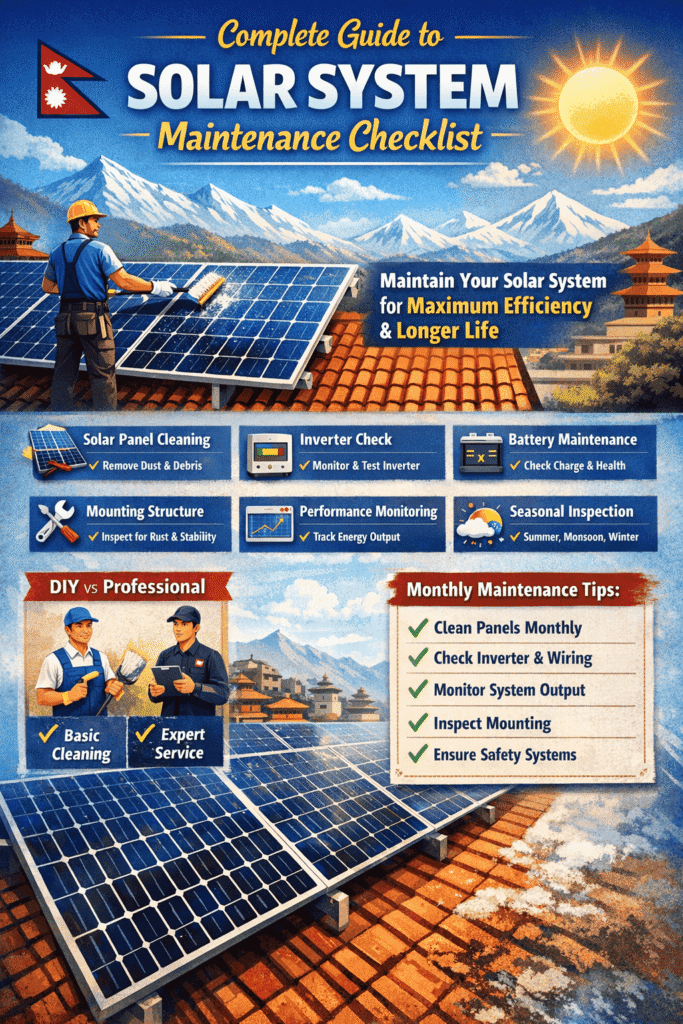
Complete Guide to Solar System Maintenance Checklist
Below is a detailed maintenance checklist every solar system owner should follow.
1. Solar Panel Cleaning Checklist
Solar panels are the most important part of the system and require regular cleaning.
What to check:
• Dust accumulation on panel surface
• Bird droppings
• Leaves or debris
• Water stains from rain
• Grease or pollution layers
Recommended action:
• Clean every 2–3 months in urban areas
• Use soft brushes and purified water
• Avoid harsh chemicals or rough cloths
2. Solar Inverter Maintenance Checklist
The inverter is the brain of your solar system.
What to check:
• Display readings and error messages
• Overheating issues
• Fan noise or dust buildup
• Connection stability
Recommended action:
• Keep inverter in a ventilated area
• Clean dust around vents
• Check performance indicators monthly
3. Battery Maintenance Checklist (If Applicable)
For systems with batteries (off-grid or hybrid):
What to check:
• Battery charge level
• Corrosion on terminals
• Water level (for lead-acid batteries)
• Charging efficiency
Recommended action:
• Keep terminals clean and tight
• Avoid deep discharge
• Regularly inspect battery condition
4. Wiring & Electrical Connections Checklist
Loose or damaged wiring can cause serious system failures.
What to check:
• Loose connections
• Exposed wires
• Rodent damage
• Burn marks or overheating signs
Recommended action:
• Regular inspection by professionals
• Secure all connections properly
• Replace damaged cables immediately
5. Mounting Structure Checklist
The mounting structure holds solar panels in place.
What to check:
• Rust or corrosion
• Loose bolts and fittings
• Structural stability
• Wind damage
Recommended action:
• Tighten bolts regularly
• Use anti-rust coating if needed
• Inspect after heavy storms or wind
6. Performance Monitoring Checklist
Monitoring helps detect issues early.
What to check:
• Daily electricity generation
• Sudden drop in output
• Seasonal performance changes
• Inverter efficiency data
Recommended action:
• Track output regularly
• Compare monthly performance
• Call professionals if output drops significantly
7. Seasonal Maintenance Checklist (Important for Nepal)
Nepal has unique seasonal changes that affect solar systems.
Summer:
• High dust buildup
• Frequent panel cleaning required
Monsoon:
• Rainwater stains
• Moisture checks needed
• Check leakage or water entry points
Winter:
• Fog and reduced sunlight
• Monitor performance drop
8. Safety Inspection Checklist
Safety is critical for all solar installations.
What to check:
• Earthing system condition
• Fire hazards
• Electrical insulation
• Surge protection devices
Recommended action:
• Annual professional safety inspection
• Ensure proper grounding system
• Use certified components
Monthly Guide to Solar System Maintenance Checklist Summary
✔ Clean solar panels
✔ Check inverter status
✔ Inspect wiring and connections
✔ Monitor system performance
✔ Check mounting structure
✔ Ensure safety systems are working
Common Solar Maintenance Mistakes to Avoid
• Ignoring cleaning for long periods
• Using hard water or chemicals on panels
• DIY electrical repairs without knowledge
• Not monitoring system output
• Delaying maintenance until breakdown
These mistakes reduce efficiency and increase repair costs.
DIY vs Professional Solar Maintenance
DIY Maintenance:
• Suitable for basic cleaning
• Limited technical knowledge required
• Risk of safety issues
Professional Maintenance:
• Deep cleaning and inspection
• Safe and advanced tools
• Performance optimization
• System diagnostics
👉 In Nepal conditions, professional complete guide to solar system maintenance is strongly recommended for best performance.
Benefits of Regular Solar Maintenance
• Higher electricity generation
• Longer system life
• Better investment return
• Reduced repair costs
• Safe and stable performance
Final Thoughts
A solar system is a long-term investment, and like any electrical system, it requires regular care. In Nepal’s dusty and polluted environment, maintenance becomes even more important to ensure maximum efficiency.
Following a proper solar system maintenance checklist helps you avoid unexpected breakdowns, improve performance, and get the most value from your solar investment.
A well-maintained solar system = higher savings + longer life + better performance.
Frequently Asked Questions (FAQs) – Guide to Solar System Maintenance Checklist
- Why is solar system maintenance important?
Solar system maintenance is important to ensure maximum efficiency, longer lifespan, and safe operation. Without maintenance, dust, dirt, and technical issues can reduce power generation significantly. - How often should I maintain my solar system in Nepal?
In Nepal, especially in Kathmandu Valley, basic maintenance should be done every 1 month, while professional maintenance and deep cleaning should be done every 2–3 months. - What is included in solar panel maintenance?
Solar panel maintenance includes cleaning dust, removing bird droppings, checking for cracks, monitoring performance, and ensuring panels are working at full efficiency. - Can I clean solar panels myself?
Yes, you can do basic cleaning yourself using soft cloths and water. However, professional cleaning is recommended for deep cleaning and safety, especially for rooftop systems. - Does rain clean solar panels?
Rain can remove light dust, but it does not fully clean solar panels. Sticky dirt, pollution layers, and bird droppings still remain on the surface. - What happens if solar panels are not maintained?
If not maintained, solar panels can lose 10%–30% efficiency or more, leading to lower electricity production and reduced savings. So, check out this guide to solar system maintenance here. - How do I know if my solar system needs maintenance?
Signs include:
• Reduced electricity output
• Dirty or dusty panels
• Inverter error messages
• Unusual system behavior
• Higher reliance on grid electricity - How long do solar systems last with proper maintenance?
With proper maintenance, solar systems can last 20–25 years or more, while inverters and batteries may require replacement sooner depending on usage. - What is the most important part of solar maintenance?
Solar panel cleaning is the most important part because dirty panels directly reduce energy generation and system efficiency. - Is professional solar maintenance necessary?
Yes, professional maintenance is highly recommended in Nepal due to dust, pollution, rooftop safety risks, and the need for technical inspection. - Can poor maintenance damage my solar system?
Yes, neglecting maintenance can lead to overheating, wiring issues, corrosion, reduced efficiency, and even system failure over time. - Do solar systems need maintenance in monsoon season?
Yes, monsoon season requires inspection for water leakage, dirt buildup, and performance changes caused by cloudy weather. - How much electricity can I lose due to poor maintenance?
Poor maintenance can reduce solar efficiency by 10% to 30% or more, depending on how dirty or neglected the system is. - What is included in professional solar maintenance service?
Professional service typically includes:
• Deep panel cleaning
• System inspection
• Wiring and inverter check
• Performance testing
• Safety evaluation - What is the best maintenance schedule for solar systems in Kathmandu?
For Kathmandu:
• Light cleaning: Monthly
• Deep cleaning: Every 2–3 months
• Full inspection: Every 6 months